
Rice County Arrest Warrants Explained
An arrest warrant is a judge's command that a person be taken into custody and brought before the court on a criminal charge. It grows out of a complaint. That document describes the alleged conduct and the offense charged, and a judge signs only after finding probable cause, which is a far higher bar than a tip or a bare accusation. Rice County follows Minnesota procedure here. The rule prefers a summons over a warrant in most cases. A warrant issues only when its conditions are met, such as a real risk that the person will not respond, an address nobody can reasonably locate, or a need to stop imminent harm. So an active Rice County warrant usually reflects a deliberate judicial choice rather than a default.
Rice County Warrants From a Complaint
Rice County's charging guidelines open a door on a step the public rarely sees. A law-enforcement report lands with the County Attorney. That office weighs the facts against the law and picks both the charge and how the case begins.
Process: Investigation and report › County Attorney review › complaint, summons, warrant, or order of detention › execution or appearance › first court date.
Rice County also publishes a sample complaint and warrant form. It shows exactly what a judge reviews: the sworn statement, the offense, the person's identifying details, and any bail or release conditions.
Inside a Rice County Arrest Warrant
A Rice County warrant carries the elements the court rules demand, and each element does its own job. Read them in order. The first three tell you whether you are even looking at the right record.
| Warrant Number | The court or agency identifier, in the format 2024-CR-01234. |
|---|---|
| Named Subject | The person the order names, with identifying detail the rules require. |
| Offense Charged | The charge the complaint alleges. |
| Issuing Judge | The judge who signed the order and the court that issued it. |
| Bail or Conditions | The amount or conditions set when the order was issued. |
| Date Issued | The date the order was entered. |
The Elements Minnesota Rule 3 Requires
Minnesota Rule of Criminal Procedure 3 spells out what every warrant must contain. That precision protects everyone involved. The rule requires the judge's signature, a name or description identifying the person, the offense charged, the bail amount or conditions where they apply, and a command to bring the person promptly before the court. A Rice County warrant without these pieces is not a valid order.
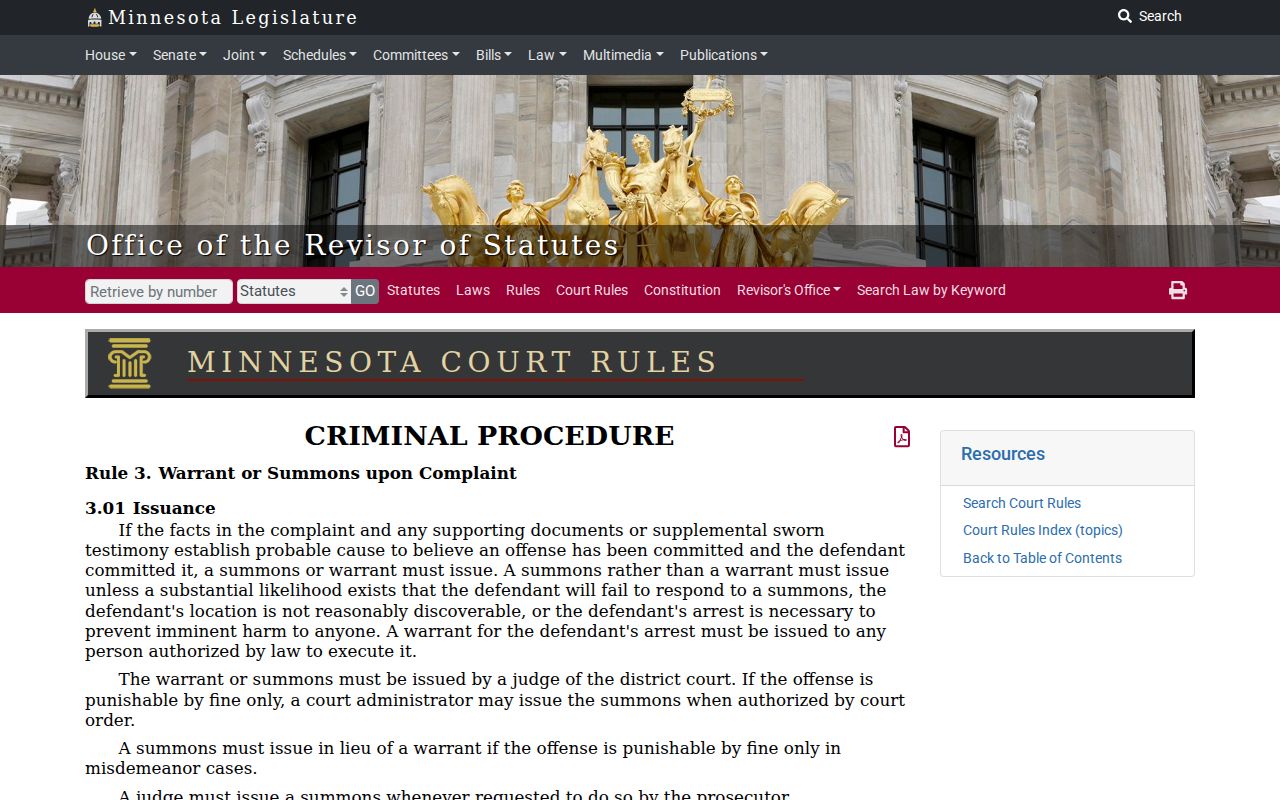
The Minnesota court rules page lays out the summons preference, the warrant conditions, and the required contents of the order itself. A Rice County export row is not that order. It carries only a slice of the signed document, so a bail figure on a list is never a quote.
Serving Arrest Warrants in Rice County
Sworn officers serve these orders. The Sheriff's Office handles Rice County warrants and prisoner transport, while city police departments serve matters arising inside their cities. Minnesota also lets an officer pursue and arrest beyond county lines in the circumstances Minn. Stat. § 629.40 describes. Where does service happen? Often at home, during a traffic stop, or when someone shows up somewhere on unrelated business. After an arrest comes booking, and then the person goes before a judge. That first appearance is where bail and release conditions get set or reviewed, and where having counsel matters most. A Rice County warrant can therefore change your circumstances quickly at almost any encounter with police.
What the Rice County Warrant Export Misses
Rice County's outstanding warrants file works fine as an index and poorly as a case file. It holds no complaint narrative, no affidavit behind the probable-cause finding, no current release order, and no next hearing date. It also omits anything a statute or court rule keeps out of public view, including active investigative data and juvenile records. The Minnesota arrest data statute draws those lines, listing which arrest fields stay public and keeping investigative work nonpublic. So a Rice County warrant list entry is a starting point, never the whole story.
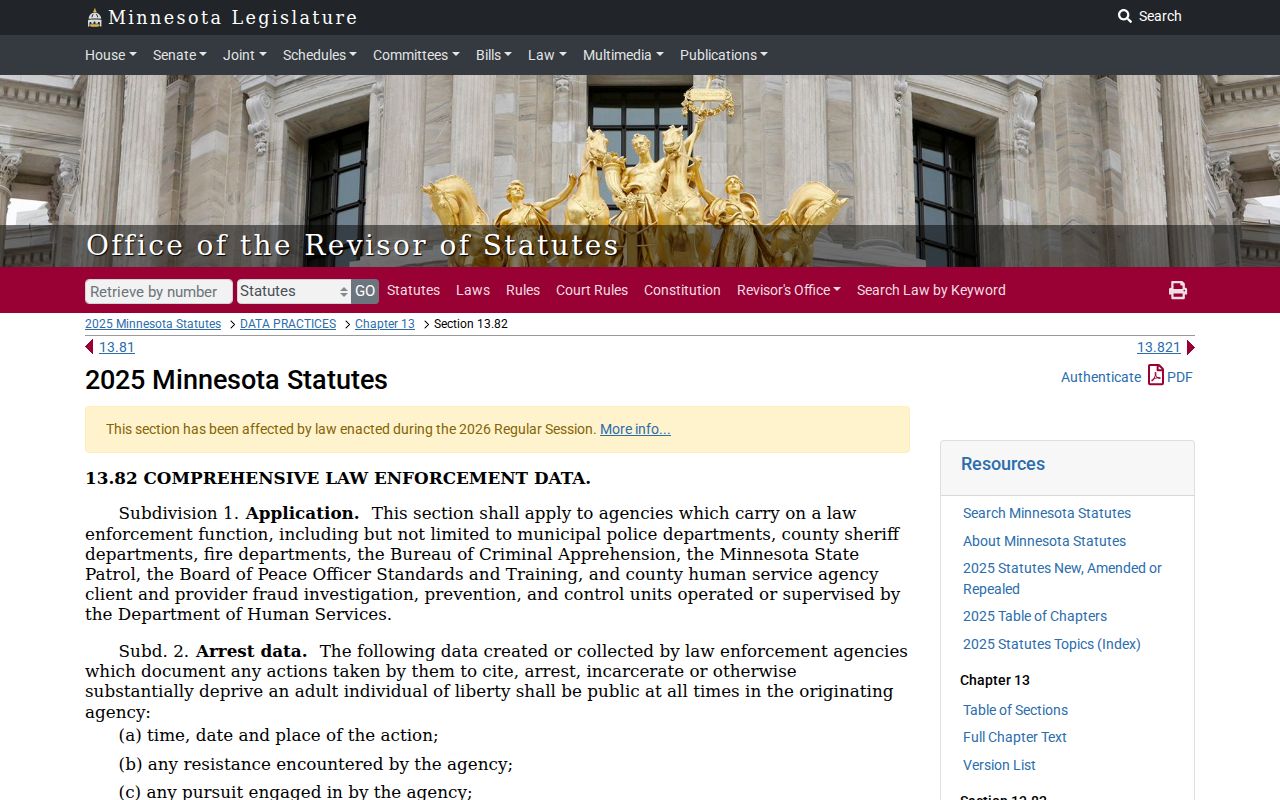
That classification is why a Rice County list entry can prove a warrant exists yet leave every real question open. Only the court file settles those.
Key Point: Ask the court for the current order rather than trusting a list status, and ask for public data only.
Minn. Stat. § 260B.171 keeps juvenile records out of adult search results.
Note: A list entry shows that an order exists, not what it requires, so ask the court for the current release conditions.
Comparing Arrest, Summons, and Bench Warrants
Three instruments, three different jobs. A summons asks; a warrant compels; a bench warrant protects a case already open. For the missed-court side, see the Rice County bench warrant search.
| Feature | Arrest Warrant | Summons | Bench Warrant |
|---|---|---|---|
| What it orders | Custody on a charge | An appearance on a date | Custody in an open case |
| Basis | Probable cause of an offense | A filed charge | A missed obligation |
| Who issues it | A judge, on a complaint | The court or an officer | The judge from the bench |
| How to respond | Counsel, appearance, bail or bond | Show up on the date | Appearance or recall |
Rice County Warrants That Cross County Lines
A Rice County warrant does not stop at the county line. Minnesota law lets officers act outside their own jurisdiction in defined circumstances, and the state's criminal information channels push warrant entries to agencies with no tie to Rice County government. Two consequences follow. First, an open order can surface far from where the case was filed. Second, a check limited to Rice County sources can miss a matter another county filed, which is why a thorough warrant search touches more than one office. Anyone running a Rice County warrant lookup should therefore treat neighboring counties and the state system as part of the same task, not optional extras.
Note: A record search that stops at Rice County sources can miss an order filed elsewhere, so check the court that handled the case.
Federal Warrants Sit in a Different Court
Federal matters stay federal. Rice County sits inside the District of Minnesota, so federal case records live in PACER, not the county file. A county search cannot confirm or rule out a federal warrant. Federal warrants can also stay sealed until a court orders otherwise, and unsealed material may sit only at a clerk's terminal. A blank federal result proves nothing about what exists.
If There's an Arrest Warrant for You
Before anything else, get the facts from an official source. Call Court Administration in Rice County and ask what the file shows. Then let a lawyer handle the timing of your next move. In Rice County, an arrest warrant can usually be resolved one of three ways. You can appear voluntarily or surrender. You can post bail or bond. Or your attorney can ask the court to recall or quash the order, which often comes up alongside a first appearance or a bond review. The county's Public Safety Center handles custody and bonding, while Rice County District Court controls the case itself and sets the conditions of release.
Important: Talk to an attorney before turning yourself in. An arrest warrant can be executed at any traffic stop or law-enforcement contact, and counsel can prepare the appearance in advance.