
Rice County Active Warrants Explained
The county jail page carries an Active Warrants link that opens the Outstanding Warrants document. That document is Rice County's public warrant list. No interactive warrant database sits behind it. Minnesota also publishes no statewide list. Here, active means the system has not marked the record inactive. That label is a status flag, not a legal conclusion, and it says nothing about whether someone is wanted today. Only the court that issued the warrant can confirm it still stands.
The Rice County List Print Stamp
Every export carries a printed date and time, and that stamp may be the most useful fact in the Rice County file. One copy ran 285 pages, printed on July 2, 2026 at 9:16 a.m. The document says nothing about how often it is regenerated, and it carries no completeness statement. Count rows with care, too. A single case can generate several rows and several offense entries, so the page count describes a document, not a caseload.
Note: Record the print date whenever you quote the list, since a copy from last month is a different document from today's file.
How Rice County Tracks Active Warrants
The Sheriff's Office Records Division builds the file from court orders and citation activity it enters into its system. Staff there handle citations, warrants, electronic charging, and public requests. That mix explains quirks in the export. One row may carry a citation number while the next leaves it blank. Remember that the sheriff's file is not the court file. It can show a status and a status date without the judge's order, the release conditions, or the next hearing. That gap is why Rice County answers can differ. A sheriff answer and a court answer can both be right.
What Converted Active Does Not Tell You
Labels in the export come straight from the system, not from a plain-language glossary. Two Rice County labels deserve special care.
- Issued Active
- The order was entered and the system still shows it open.
- Converted Active
- A label reflecting a system change. No public definition was located, so ask records staff what it means for a specific file.
- Bench Warrant-fail to appear at a hearing
- The county's label for a bench warrant tied to a missed hearing.
- Violation or Probation Warrant
- An alleged probation or release violation, handled by the court rather than a payment counter.
- Status Date
- The date a status was recorded, not a promise that it is current today.
Inside an Active Warrant Record
A published Rice County entry is short on detail. Read the identifiers first and the description last. Identifiers are what an official office can act on.
| Warrant Number | The system identifier, shown in the format 2024-CR-01234. |
|---|---|
| Type | The county label, such as bench warrant or arrest and complaint. |
| Issuing Authority | The judge or court attached to the order. |
| Issued | The date the warrant was issued. |
| Current Status | The recorded status at the time of the export. |
| Status Date | The date tied to that status entry. |
The Rice County export also carries subject and descriptor columns, including confidentiality wording for addresses and phone numbers. Those fields stay out of this material. Keep them out of any conversation about someone else's record, too.
Served Warrants Leave the Rice County List
An entry leaves the Rice County list when the system updates, not when the event happens. A warrant served at a traffic stop can linger in the export until records staff process it. A judge's recall follows the same slow path. The court order and the sheriff export are separate records. Each one updates on its own timeline.
Process: Court or officer action › entry recorded in the sheriff system › export regenerated with a new print stamp › row changes or drops.
The Minnesota public data statute controls how a Rice County record is released. It also spells out what a denial must cite.
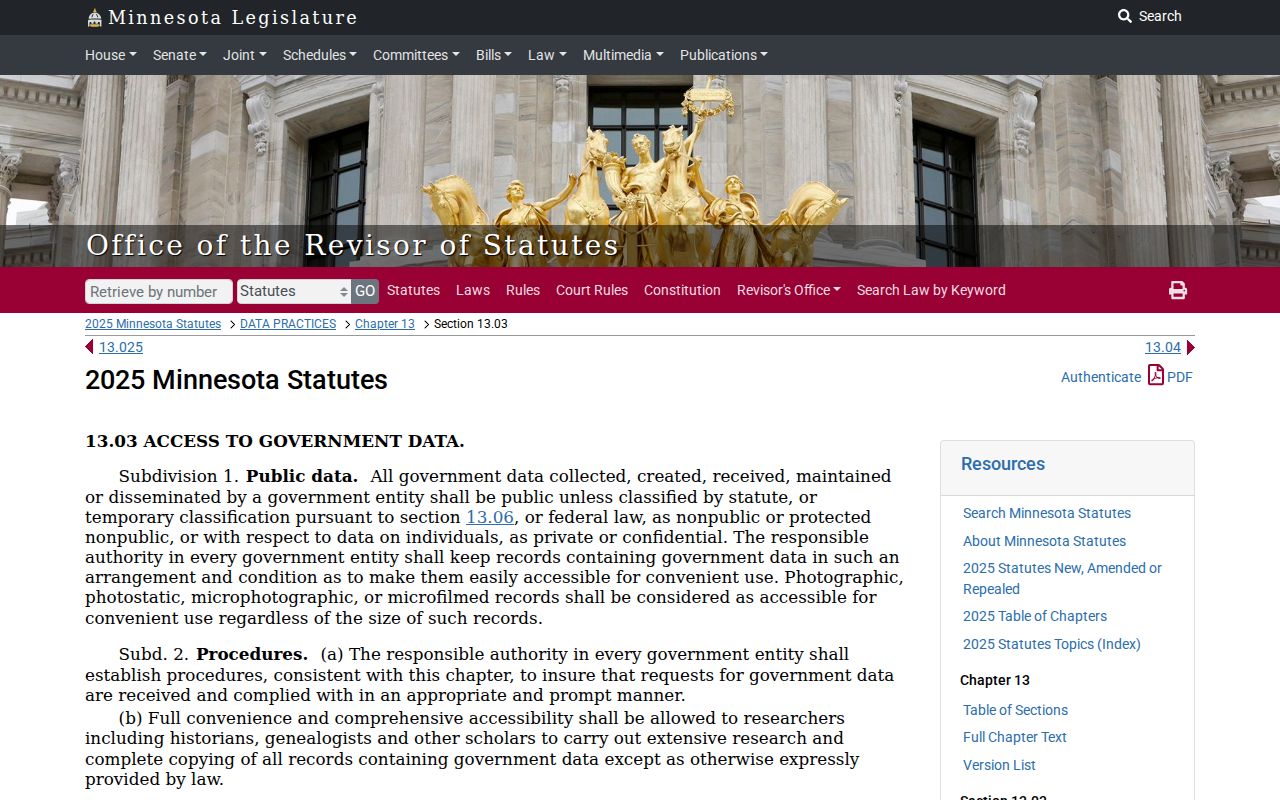
That release rule is why a Rice County warrant record can arrive with some fields and not others, even when the entry itself is public. Keep any paperwork you receive. A court order or a receipt showing a resolved matter is proof you can produce later, even after the list catches up.
Warrant Roundups and Most-Wanted Lists
Rice County posts no most-wanted roster. The outstanding warrants export is a records product, not a poster campaign, and the two serve different purposes. What the county does point to is an anonymous tip channel run through Crime Stoppers, which takes information without asking who you are.
Key Point: The official list is the authoritative source, and it changes as warrants are served or recalled. Crime Stoppers of Minnesota takes anonymous tips at 1-800-222-8477 and describes rewards for qualifying information.
Absence from the county export is not proof that no warrant exists.
Curious how the tip program works? The Rice County most wanted list material explains that, and what it is not.
No Warrant Amnesty Program in Rice County
Rice County runs no amnesty day, no warrant roundup, and no reduced-fee clearing event. That gap matters. A caller who promises a warrant will vanish once you pay is describing something Rice County does not run. Three real programs get mistaken for amnesty. A sign-and-release warrant changes how a first missed appearance is handled in certain misdemeanor cases, but it is a statutory process, not forgiveness. A payment plan through the Minnesota Court Payment Center can spread an eligible fine. That payment counts as a guilty plea and a waiver. Neither program recalls an arrest warrant on its own.
Requesting an Older Rice County Warrant Snapshot
Need the list as it stood on a certain date? Ask Rice County in writing rather than relying on a saved copy. The county accepts public data requests without requiring its form.
- Ask the Sheriff's Office Records Division for the export by date, and describe the fields you need.
- Ask whether the county maintains prior snapshots, since a current file does not prove what an older one said.
- Ask for the system definition of any status label you do not understand.
- Ask Court Administration separately for the current order, because a list entry is not an order.
Send requests to the office holding the record. The county administration page lists the sheriff records contact for law-enforcement data, while Rice County District Court answers for the case file.
When Your Name Is on the Warrant List
Do not sit still and wait to be found. A Rice County warrant can surface at a traffic stop or a courthouse security line, which is the worst spot to argue a mistake. That is not where anyone sorts out a record. Confirm the entry with the issuing court first. Then talk with counsel about the next move. Your options include appearing, posting bail or bond, or asking the judge for a recall. If the name on the list belongs to a relative, take a breath before you dig, since their record may hold details you have no right to see. A relative can still ask the clerk general process questions without anyone pulling protected information.
Important: Talk to an attorney before you act on a listed warrant. The court controls the recall, the jail controls custody, and neither can give you legal advice.